
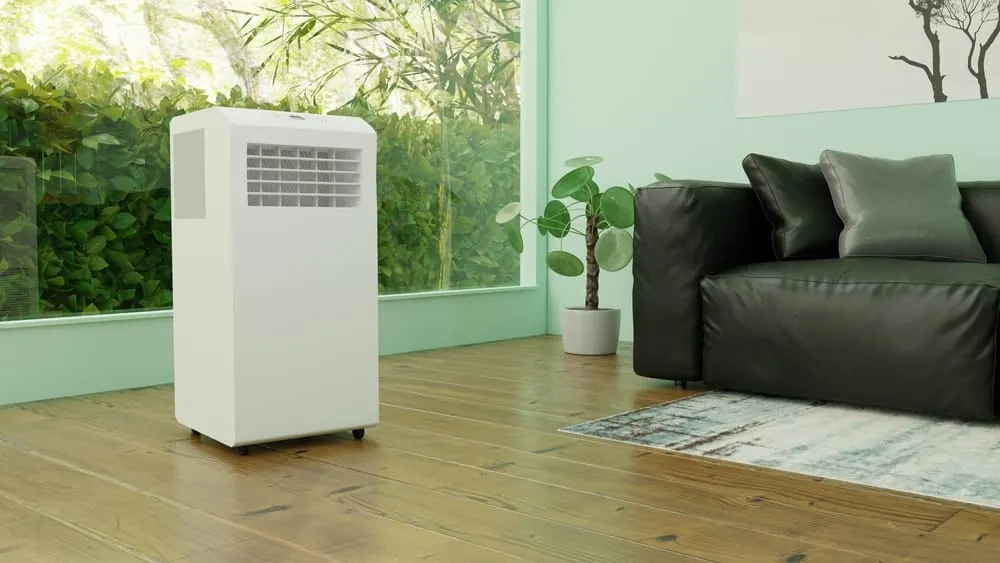
When the summer heat hits its peak, we all start looking for that one thing that’ll make our living space bearable again. Central AC is great if you’ve got it, but the reality is that plenty of people are renting, living in older buildings, or just don’t want to drop thousands on a whole-house system. That’s where portable air conditioners come in.
We spent a good amount of time comparing what’s out there, and honestly, the market is flooded with options that range from surprisingly capable to outright garbage. After cutting through the noise, we landed on three units that deliver real cooling power without asking you to remortgage your house. These are the ones we’d actually recommend to a friend.
If portable units aren’t quite what you need, window air conditioners or even a solid ceiling fan setup might be a better fit. But if you want something you can wheel from your bedroom to your home office and back again, keep reading.
Why Go Portable?
The biggest selling point is obvious: you can move them. Got a bedroom that turns into a sauna at night but a home office that’s unbearable during the day? One portable unit handles both. Try doing that with a window unit.
Beyond mobility, the setup is dead simple. You’re not mounting anything permanently, you’re not modifying your windows in a way that’ll cost you your security deposit, and you’re not calling an HVAC tech. Most portable ACs just need a window kit for the exhaust hose, and you can have the whole thing running in under 20 minutes.
The newer models have gotten significantly better on energy efficiency too. A decade ago, portable ACs were notorious for running up electricity bills. That’s changed. The units we’re recommending here all carry reasonable energy ratings, so you won’t get a nasty surprise on your next utility statement.
Finding the Right Size (This Part Matters More Than You Think)
One of the most common mistakes people make is grabbing whatever’s on sale without checking whether it’s actually sized for their room. A unit that’s too small will run constantly and never get the room comfortable. A unit that’s too big will blast cold air, shut off, cycle back on, and never properly pull the humidity out, leaving you in a cold, clammy space that somehow still feels wrong.
Here’s how to figure out what you need. Measure your room’s square footage: length times width for a rectangular room. If your room has an odd shape, break it into sections, calculate each one, and add them up.
Once you have that number, use this as a rough guide:
| Room Size | Recommended BTUs |
|---|---|
| Up to 200 sq. ft. | 8,000 BTUs |
| 200 to 300 sq. ft. | 10,000 BTUs |
| 300 to 400 sq. ft. | 12,000 BTUs |
A couple of things can push you toward the higher end. Rooms with tall ceilings, large windows, or heavy sun exposure all need more cooling power. Same goes for kitchens, where your oven and stovetop are generating heat that your AC has to fight against.
And one more thing that gets overlooked: an oversized unit cooling a small room is not a win. It cools the air fast, sure, but it short-cycles. The compressor kicks on, blasts cold air, the thermostat says “good enough,” and it shuts off before it’s had a chance to properly dehumidify. The result is a room that’s cold to the touch but feels damp and uncomfortable. Get the right size and it runs in longer, steadier cycles that actually make the room pleasant.
1. Black+Decker BPACT08WT
If you need to cool a smaller space and you don’t want to spend much doing it, this is the unit to look at. The Black+Decker BPACT08WT is rated for rooms up to 150 square feet, which makes it a solid pick for bedrooms, small offices, or studio apartments.
What we like about this one is how compact it is. Some portable ACs are basically furniture at that point, taking up a corner of the room you didn’t want to give up. The BPACT08WT keeps a smaller footprint while still pushing enough cold air to make a noticeable difference.
The slide-out filter is a nice touch. Instead of fumbling with some clip-on panel that never quite snaps back into place, you just pull the filter out, rinse it, and slide it back in. It takes about 30 seconds and keeps the unit running efficiently. We’d recommend doing this every two weeks during heavy use.
On the noise front, this one runs quieter than most in its price range. You’ll still hear it, obviously. It’s an air conditioner. But it won’t drown out your TV or keep you awake at night once you’ve gotten used to it.
The catch: 150 square feet is genuinely the ceiling here. If your room is any bigger, this unit will struggle. It’ll run constantly, your electricity bill will climb, and you still won’t feel comfortable. It’s a great unit for what it’s designed to do, but don’t ask it to cool your 300-square-foot living room.
Best for: Small bedrooms, dorm rooms, home offices under 150 sq. ft.
2. Honeywell MO08CESWK
Honeywell has been making climate products for a long time, and this one shows that experience. The MO08CESWK pulls double duty as both an air conditioner and a dehumidifier, which is genuinely useful if you live somewhere where the humidity is half the problem.
The smart digital humidity control is the standout feature here. You set your desired humidity level and the unit manages it automatically. During those muggy July days when the air feels thick even indoors, this feature alone makes the room dramatically more comfortable. We’ve used units without this, and the difference is real.
It handles medium-sized rooms well, and the built-in wheels make it easy to roll between spaces. The casters are smooth enough that they won’t scratch hardwood floors, which is a detail some manufacturers still haven’t figured out.
Design-wise, it’s one of the better-looking portable ACs you’ll find. That might sound like a strange thing to care about, but if this unit is going to sit in your living room for four months straight, it’s nice that it doesn’t look like an industrial appliance.
The catch: The exhaust hose setup can be a bit finicky on first install. The window kit works fine once it’s in place, but getting the hose connected and the window panel sealed properly took us a couple of attempts. Not a dealbreaker by any means, but budget an extra 15 minutes for setup compared to the Black+Decker.
Best for: Medium rooms where humidity is a concern, apartments with hardwood floors.
3. LG LP0817WSR
LG makes solid appliances across the board, and this portable AC is no exception. The LP0817WSR is rated for spaces up to 200 square feet and puts out consistent, even cooling that you can feel across the room.
The auto-swing air vent is worth mentioning. Instead of blasting cold air in one direction (which creates that annoying “one spot is freezing, the rest of the room is warm” problem), it oscillates and distributes the air more evenly. It seems like a small thing until you’ve spent a summer sitting directly in front of a unit that doesn’t do this.
The auto-evaporation system is a practical win. Many portable ACs collect condensation in an internal tank that you have to drain manually, sometimes daily during humid stretches. The LG evaporates most of that moisture through the exhaust, so you’re emptying the tank far less often. During moderate humidity days, you might not need to drain it at all.
It also comes with a remote control, which is one of those features that feels unnecessary until you’re already in bed and realize the room is too cold. Being able to adjust the temperature or set a sleep timer without getting up is a small luxury that makes a daily difference during summer.
The catch: When you do need to drain the tank (and you will occasionally during really humid stretches), the drainage process isn’t as smooth as we’d like. The drain plug is positioned in a way that makes it awkward to get a pan underneath without tilting the unit. It’s manageable, but it’s the one area where the design could be better.
Best for: Bedrooms and living spaces up to 200 sq. ft., people who don’t want to deal with constant tank draining.
Quick Comparison
| Feature | Black+Decker BPACT08WT | Honeywell MO08CESWK | LG LP0817WSR |
|---|---|---|---|
| Room Size | Up to 150 sq. ft. | Medium rooms | Up to 200 sq. ft. |
| Dehumidifier | No | Yes | Auto-evaporation |
| Noise Level | Low | Moderate | Moderate |
| Remote Control | No | No | Yes |
| Best Feature | Compact size | Humidity control | Even air distribution |
Which One Should You Get?
If you’re cooling a small room on a tight budget, the Black+Decker BPACT08WT is the pick. It does one thing and does it well, and the price reflects that it’s not trying to be something it’s not.
If humidity is a major factor where you live, or if you want a unit that looks decent sitting in your living room, the Honeywell MO08CESWK is worth the step up. The dual AC and dehumidifier function gives you more bang for your money during those really sticky months.
If you want the most well-rounded unit with the least maintenance hassle, go with the LG LP0817WSR. The auto-evaporation, even cooling distribution, and remote control add up to a unit that you set up once and then mostly forget about until October.
All three of these are legitimately good at what they do, and none of them will put a serious dent in your finances. The worst thing you can do is spend another summer sweating it out because you couldn’t decide. Pick the one that fits your room size, plug it in, and enjoy actually being comfortable in your own home.