
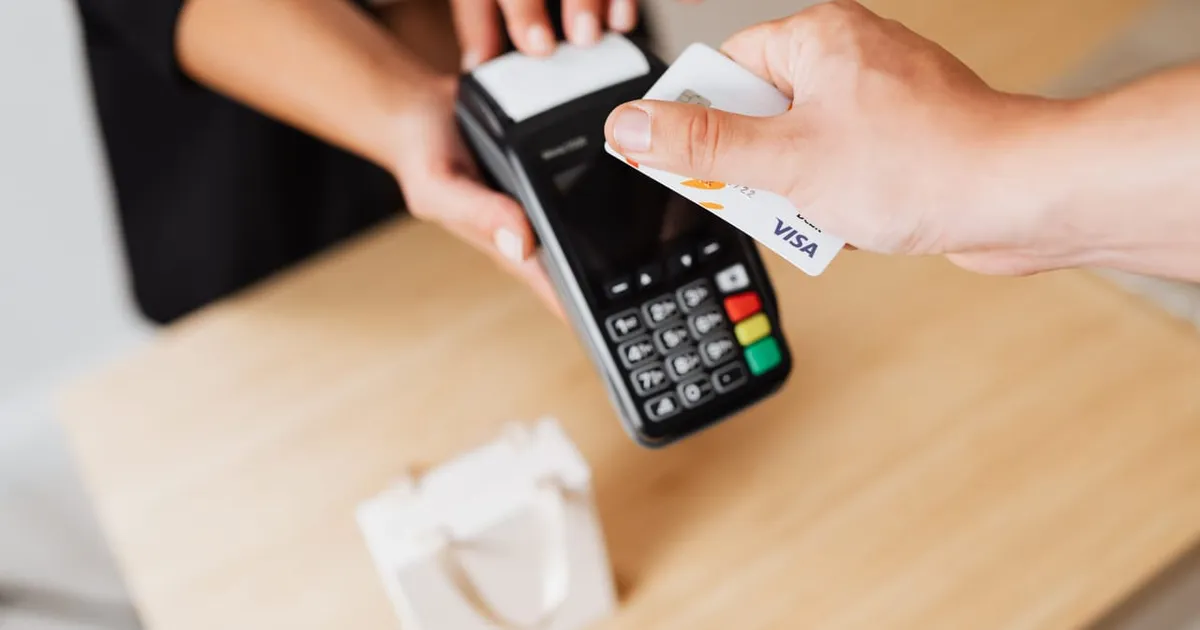
You’re standing at the grocery checkout with a $142 cart, and the card you tap decides whether you walk away with $1.42 back or $7.10. Same swipe, same second of your life. The only difference is which rectangle of plastic you pulled out of your wallet.
That gap is the whole game with cash back. Most people grab one card, earn a lazy 1% on everything, and never think about it again. We get it. But a little structure here pays for a few nice dinners a year, and it doesn’t take a spreadsheet to set up.
So let’s rank the cards that actually earn well in 2026, do the math on what they pay, and then show you the part nobody explains: how pairing two no-fee cards beats almost any single card you could carry.
A quick housekeeping note before we get into numbers. Bonuses, APRs, and category lineups shift constantly, and a couple of these cards are mid-transition this year. Always confirm the current terms on the issuer’s page before you apply.
The two kinds of cash back, and why you want both
There are really only two flavors of cash back card.
Flat-rate cards pay the same percentage on everything. Swipe at the gas pump, the vet, the dentist, it’s all the same rate. The job of a flat-rate card is to never make you think.
Category cards pay a fat rate (usually 5%) on specific spending and a weak rate on everything else. They reward you for paying attention.
A single card forces a compromise. Flat-rate caps your upside; a category card leaves money on the table everywhere outside its sweet spot. The fix is to stop picking one. More on that after we rank them.
The best flat-rate cards
Citi Double Cash and Wells Fargo Active Cash (tie for the throne)
The Citi Double Cash has been the default 2% card for a decade, and it still earns 2% on everything (1% when you buy, 1% when you pay) with a $0 annual fee. As of mid-2026 it carries a $200 cash back bonus after $1,500 in spend over six months. It’s the boring, reliable engine of a good wallet.
The Wells Fargo Active Cash matches the 2% flat rate and a $0 fee, then adds the things the Double Cash skips: a $200 bonus after just $500 in three months (a much easier target), a 0% intro APR for 12 months, and up to $600 in cell phone protection when you pay your phone bill with it. Offers like these move around, so check the live terms before applying.
Honest take: if you’re opening one 2% card today and don’t already bank with Citi, the Active Cash is the slightly better pick because of the easier bonus and the phone insurance. The Double Cash’s quiet edge is that its rewards are secretly Citi ThankYou points, so if you later add a Citi Strata Premier, that “2% cash” becomes transferable travel currency. Most people will never use that, and that’s fine.
Skip the 1.5% cards (mostly)
The Capital One Quicksilver earns 1.5% flat. On $25,000 of yearly spending, 1.5% versus 2% is the difference between $375 and $500. That’s $125 a year you’re handing back for no reason. The Quicksilver has one real argument (no foreign transaction fee, plus a 0% intro APR), so it can earn its keep as a travel card. As your everyday earner, the 2% cards win.
The best category cards
Discover it Cash Back
The Discover it Cash Back runs 5% rotating categories each quarter (on up to $1,500 in spend, then 1%), with $0 annual fee. Its trick is Cashback Match: Discover doubles everything you earn in year one. That turns 5% into an effective 10% and the 1% base into 2% for your first 12 months. For a brand-new cardholder, it’s one of the best first-year deals out there, though Discover can tweak how Cashback Match works, so confirm the current terms before you apply.
Two things to know for 2026. First, Discover cards are moving onto Capital One’s platform starting July 27, 2026 after the merger closed; the name, the no annual fee, and Cashback Match are all sticking around, and existing accounts gain access to some Capital One travel and entertainment categories. Second, the catch that never changes: you have to activate the 5% categories each quarter, and after year one the base rate drops back to a weak 1%.
Chase Freedom Flex
The Chase Freedom Flex is the other big rotating-category card: 5% on quarterly categories (up to $1,500, activation required), plus standing rates of 3% on dining and drugstores, and 5% on travel booked through Chase. No annual fee, and a $200 bonus after $500 in spend has been common in 2026. The Q3 2026 lineup, for reference, covers gas stations, EV charging, and public transit. Categories rotate, so confirm the current quarter when you apply.
The Freedom Flex’s real superpower shows up later. Its rewards are Chase points, so if you ever add a Chase Sapphire card, that 5% cash can convert to transferable travel points. Even if you never do, the standing 3% on dining and drugstores makes it useful between rotations.
Capital One Savor
If your spending is heavy on restaurants and groceries and you hate activating anything, the Capital One Savor earns a flat, no-cap 3% on dining, groceries, entertainment, and popular streaming (Netflix, Disney+, Hulu and the like), 1% on everything else, $0 annual fee, and no foreign transaction fee. As of 2026 it’s been running a $250 bonus after $500 in spend, but that figure moves around, so confirm it on Capital One’s page before applying. It’s the closest thing to a “set it and forget it” category card, and the no-cap part matters if you spend more than $1,500 a quarter on food.
One card we’ll mention and then set aside: the Citi Custom Cash (5% on your top category automatically, up to $500/month) stopped accepting new applications in May 2026. If you already hold it, keep it. If not, the cards above cover the same ground.
The comparison table
Here’s the everyday lineup side by side. Bonuses and APRs are as of mid-2026 and drift often; verify before applying.
| Card | Annual fee | Earn rate | Welcome offer | Best for |
|---|---|---|---|---|
| Wells Fargo Active Cash | $0 | 2% flat | $200 after $500/3 mo | Simple primary card |
| Citi Double Cash | $0 | 2% flat | $200 after $1,500/6 mo | 2% + future Citi points |
| Discover it Cash Back | $0 | 5% rotating + 1% | Cashback Match (year 1) | First card, year-one value |
| Chase Freedom Flex | $0 | 5% rotating, 3% dining/drugstore | $200 after $500/3 mo | Category nerds, Chase points |
| Capital One Savor | $0 | 3% dining/grocery/streaming | $250 after $500/3 mo | Food-heavy, no activation |
| Capital One Quicksilver | $0 | 1.5% flat | $200 after $500/3 mo | Travel/foreign use only |
The math: what a single card actually pays you
Let’s put a real budget through these cards. Say you spend $30,000 a year, split like this: $6,000 groceries, $4,800 dining, $3,600 gas, and $15,600 on everything else (bills, shopping, the dentist, the vet).
A single flat 2% card pays a clean $600. No thinking, no activation, no caps. That’s your baseline, and it’s a perfectly respectable number.
Now run the same budget through one rotating-category card alone. The Discover it nails 5% on whatever’s in season, but those categories cover maybe a third of your year and cap at $1,500 a quarter. Everything outside the bonus earns 1%. After year one, a category card flying solo often lands below that flat $600, because the 1% base drags down all your uncovered spending. A great category card with a bad base rate is a trap if it’s your only card.
That’s the case for not choosing.
Which combo beats one card
The move is one flat-rate card plus one category card, both with no annual fee. You use the category card where it pays 5% or 3%, and the flat 2% card catches literally everything else. Nothing earns 1% anymore.
Run that same $30,000 budget through a Citi Double Cash (2%) + Capital One Savor (3% on food) pairing:
| Spending | Amount | Card used | Rate | Cash back |
|---|---|---|---|---|
| Groceries | $6,000 | Savor | 3% | $180 |
| Dining | $4,800 | Savor | 3% | $144 |
| Gas | $3,600 | Double Cash | 2% | $72 |
| Everything else | $15,600 | Double Cash | 2% | $312 |
| Total | $30,000 | $708 |
That’s $708 versus $600, an extra $108 a year for owning one more free card and tapping the right one at dinner. Swap the Savor for a Chase Freedom Flex if your spending shifts by quarter and you don’t mind activating; in your first year, slot in the Discover it and Cashback Match roughly doubles your category earnings, pushing the total higher still.
The pairing we’d actually recommend most people start with: Wells Fargo Active Cash as the 2% backbone, plus the Discover it for year-one juice and ongoing 5% rotations. Two cards, zero fees, and you’ve quietly turned a 2% wallet into something closer to 3% blended.
What to watch for
A few catches worth saying out loud before you go apply for three cards in a weekend.
- Activation is real. The Discover it and Freedom Flex pay 1%, not 5%, if you forget to opt in each quarter. Set a calendar reminder for the first of January, April, July, and October.
- The 5% caps are low. Both rotating cards stop the bonus rate after $1,500 a quarter. Past that, sweep spending to your flat card.
- Foreign transaction fees. The Double Cash and most of these charge 3% abroad. Use the Savor or Quicksilver overseas instead.
- New applications open and close. The Citi Custom Cash stopped taking applicants in 2026, and the Discover lineup is mid-migration to Capital One. Confirm a card is still available before you count on it.
- Cash back only pays if you pay in full. Carry a balance and the 18-29% APR on these cards eats every dollar of rewards and then some. Rates and offers change often, so read the current terms.
Two free cards and the discipline to tap the right one is the entire system. Set the calendar reminders, let the flat card mop up everything the category card misses, and that checkout gap at the top stops costing you money.